
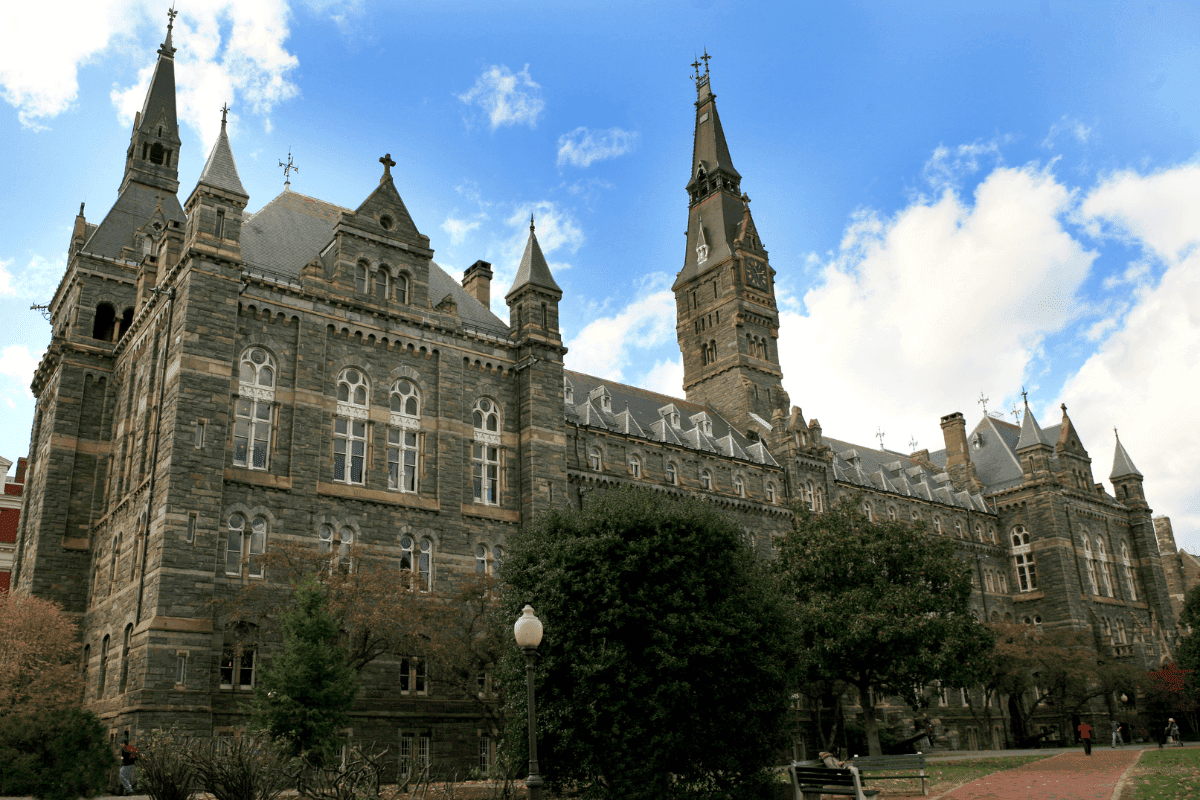
Harvard’s been around since 1636. That’s 140 years before the United States even existed. When you look at the oldest colleges in America, you’re not just reading a list of schools. You’re reading the story of the country itself.
These 51 institutions watched the Revolution unfold, survived wars, reshaped American culture, and trained the people who built this nation. Generals, presidents, scientists, and poets all walked through their doors. Some schools started as seminaries for ministers. Others were built on the frontier when “the frontier” was Pennsylvania. A few were founded by people who believed women and freed men deserved the same education as anyone else.
Every entry on this list is still operating today. That’s the real test. Not just surviving — actually continuing to educate students across centuries of change.
| # | Institution | Location | Est. | Type |
|---|---|---|---|---|
| 1 | Harvard University | Cambridge, MA | 1636 | Private |
| 2 | College of William & Mary | Williamsburg, VA | 1693 | Public |
| 3 | St. John’s College | Annapolis, MD | 1696 | Private |
| 4 | Yale University | New Haven, CT | 1701 | Private |
| 5 | University of Pennsylvania | Philadelphia, PA | 1740 | Private |
| 6 | Moravian University | Bethlehem, PA | 1742 | Private |
| 7 | University of Delaware | Newark, DE | 1743 | Public |
| 8 | Princeton University | Princeton, NJ | 1746 | Private |
| 9 | Washington and Lee University | Lexington, VA | 1749 | Private |
| 10 | Columbia University | New York City, NY | 1754 | Private |
| 11 | Brown University | Providence, RI | 1764 | Private |
| 12 | Rutgers University | New Brunswick, NJ | 1766 | Public |
| 13 | Dartmouth College | Hanover, NH | 1769 | Private |
| 14 | College of Charleston | Charleston, SC | 1770 | Public |
| 15 | Salem College | Winston-Salem, NC | 1772 | Private |
| 16 | Dickinson College | Carlisle, PA | 1773 | Private |
| 17 | Hampden-Sydney College | Hampden Sydney, VA | 1775 | Private |
| 18 | Transylvania University | Lexington, KY | 1780 | Private |
| 19 | Washington & Jefferson College | Washington, PA | 1781 | Private |
| 20 | Washington College | Chestertown, MD | 1782 | Private |
| 21 | University of Georgia | Athens, GA | 1785 | Public |
| 22 | Castleton University | Castleton, VT | 1787 | Public |
| 23 | York College of Pennsylvania | York, PA | 1787 | Private |
| 24 | Franklin & Marshall College | Lancaster, PA | 1787 | Private |
| 25 | University of Pittsburgh | Pittsburgh, PA | 1787 | Public |
| 26 | University of North Carolina at Chapel Hill | Chapel Hill, NC | 1789 | Public |
| 27 | Georgetown University | Washington, D.C. | 1789 | Private |
| 28 | University of Vermont | Burlington, VT | 1791 | Public |
| 29 | Williams College | Williamstown, MA | 1793 | Private |
| 30 | Tusculum University | Greeneville, TN | 1794 | Private |
| 31 | Bowdoin College | Brunswick, ME | 1794 | Private |
| 32 | University of Tennessee-Knoxville | Knoxville, TN | 1794 | Public |
| 33 | University of South Carolina-Beaufort | Beaufort, SC | 1795 | Public |
| 34 | Union College | Schenectady, NY | 1795 | Private |
| 35 | Hartwick College | Oneonta, NY | 1797 | Private |
| 36 | University of Louisville | Louisville, KY | 1798 | Public |
| 37 | Middlebury College | Middlebury, VT | 1800 | Private |
| 38 | Vincennes University | Vincennes, IN | 1801 | Public |
| 39 | University of South Carolina | Columbia, SC | 1801 | Public |
| 40 | United States Military Academy | West Point, NY | 1802 | Military |
| 41 | Ohio University | Athens, OH | 1804 | Public |
| 42 | University of Maryland Baltimore | Baltimore, MD | 1807 | Public |
| 43 | Mount Saint Mary’s University | Emmitsburg, MD | 1808 | Private |
| 44 | Miami University | Oxford, OH | 1809 | Public |
| 45 | Hamilton College | Clinton, NY | 1812 | Private |
| 46 | University of Virginia | Charlottesville, VA | 1819 | Public |
| 47 | Amherst College | Amherst, MA | 1821 | Private |
| 48 | Kenyon College | Gambier, OH | 1824 | Private |
| 49 | Virginia Military Institute | Lexington, VA | 1839 | Military |
| 50 | United States Naval Academy | Annapolis, MD | 1845 | Military |
| 51 | University of Wisconsin-Madison | Madison, WI | 1848 | Public |
The Details: All 51 Oldest U.S. Colleges and Universities
1. Harvard University
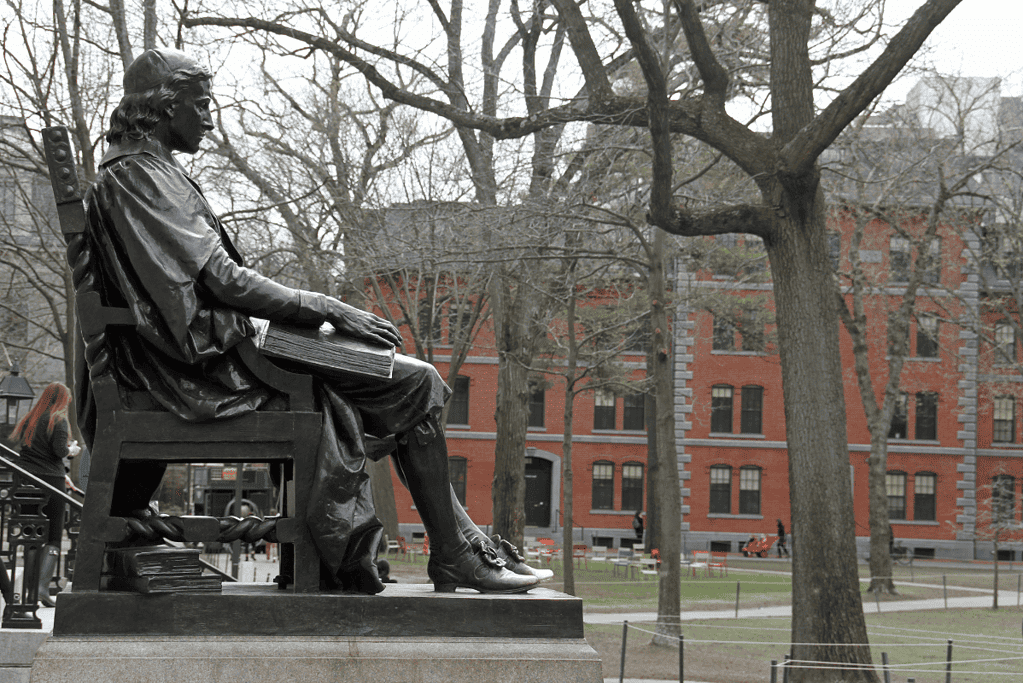
Harvard is the oldest institution of higher education in the United States — founded 140 years before the country itself existed. The Massachusetts Bay Colony establishes it in 1636 to train Puritan ministers. Back then, the entire faculty is one man, and the student body fits in a single room.
Today, Harvard sits on a $50 billion endowment — the largest of any university in the world. It houses some of the most prestigious professional schools in existence: the Harvard Business School, Harvard Law, and Harvard Medical School all operate on campus. Eight U.S. presidents earn degrees here.
The university’s influence on American intellectual life is nearly impossible to overstate. From the founding era to today, Harvard shapes law, medicine, politics, and science generation after generation.
Harvard has an extensive network of underground tunnels connecting buildings across campus. Originally built for maintenance, they become a source of legend among students — with rumors of secret society meetings and late-night explorations beneath the historic yard.
2. College of William & Mary

King William III and Queen Mary II of England charter this college in 1693, making it the second oldest school in the country and the oldest public university in the United States. It sits in Williamsburg, Virginia — the colonial capital — putting it at the center of early American political life.
Three U.S. presidents attend William & Mary: Thomas Jefferson, James Monroe, and John Tyler. Jefferson later calls it foundational to his own political thinking. The school survives the Revolution, the Civil War, and more than three centuries of American history without closing its doors.
The Sir Christopher Wren Building on campus is the oldest academic building in continuous use in the United States, constructed between 1695 and 1700. It serves as a classroom, library, and hospital during both the Revolutionary War and the Civil War — and still houses faculty offices today.
3. St. John’s College

St. John’s College, founded in 1696 in Annapolis, takes a different path than almost every other school on this list. Students here don’t choose majors. Instead, everyone reads the same great works of Western civilization — from Plato and Homer to Newton and Einstein — and discusses them in small seminars.
The Great Books curriculum, introduced in the 1930s, becomes the school’s identity. It’s a small liberal arts college that bets everything on deep reading and honest conversation. The model still runs today at two campuses, in Annapolis and Santa Fe.
St. John’s College hosts the annual “Annapolis Cup” croquet match against the neighboring United States Naval Academy. The event began in 1983 and draws thousands of spectators in elaborate costumes — a distinctly St. John’s take on school rivalry.
4. Yale University

Founded as the Collegiate School in 1701 by a group of Congregationalist ministers, Yale moves to New Haven in 1718 and takes its current name from Elihu Yale, a Welsh merchant who donates money and goods to keep the school alive. It’s one of the great early examples of private philanthropy saving a struggling institution.
Yale becomes the Ivy League’s second school and grows into one of the world’s top research universities. Its law school, art gallery, and drama school all rank among the best in their fields. Five U.S. presidents graduate from Yale, including both George H.W. Bush and George W. Bush.
The Beinecke Rare Book & Manuscript Library at Yale holds the famous Voynich Manuscript — a 15th-century book written in an unknown script that no one has ever decoded. Cryptographers, linguists, and historians have all tried. It remains one of the world’s most mysterious texts.
5. University of Pennsylvania

Benjamin Franklin founds the University of Pennsylvania in 1740 — and his vision is different from every other school on this list. Franklin doesn’t want to train ministers. He wants to train people for practical, public life. The curriculum at Penn focuses on useful subjects: commerce, science, and civic leadership.
Penn is also the first university in America to offer both undergraduate and graduate education in the same institution. The Wharton School, founded at Penn in 1881, becomes the first collegiate business school in the United States. That legacy of practical, professional education still defines Penn today.
The world’s first general-purpose electronic digital computer, ENIAC, is built at Penn between 1943 and 1945. It weighs over 30 tons, fills a room of roughly 1,800 square feet, and performs calculations in seconds that would take humans hours. Penn effectively launches the digital age.
6. Moravian University

Moravian holds a distinction that gets overlooked: it’s the first institution in the United States to educate women. Countess Benigna Von Zinzendorf founds the Bethlehem Female Seminary in 1742, nearly a century before most other schools consider admitting women. The Moravian Church has a tradition of gender equality that’s radical for its time.
The institution later evolves into a co-educational liberal arts college and today operates as Moravian University. Its long history in Bethlehem, Pennsylvania, gives it deep ties to one of America’s most distinctive religious communities.
The “Moravian Star” — a 26-point illuminated star — appears prominently on campus each holiday season. The tradition traces back to 19th-century Moravian schools in Germany, where teachers used the star as a geometry lesson. Today it’s a symbol of the entire Moravian community.
7. University of Delaware

The University of Delaware starts in 1743 as a small “Free School” in New London, Pennsylvania, founded by the Reverend Dr. Francis Alison. It moves to Newark, Delaware, in 1765, becomes a degree-granting institution in 1834, and grows steadily across two centuries into one of the region’s major research universities.
Delaware holds a unique place in the history of international education. In 1923, Professor Raymond Kirkbride leads a group of eight students on a summer trip to study in France — the first organized study abroad program in American university history. The model UD invents is now standard at universities worldwide.
The University of Delaware essentially creates study abroad as we know it. Professor Kirkbride’s 1923 trip to France — with just eight students — launches a tradition that today sends millions of American students overseas every year.
8. Princeton University

Princeton begins as the College of New Jersey in 1746, founded by Presbyterian ministers who want to train future clergymen. The college spends its first decade moving between three different towns before finally settling in Princeton in 1756. Nassau Hall, the campus’s first building, briefly serves as the capitol building of the United States in 1783.
Princeton renames itself in 1896 to reflect its growing national stature. It becomes one of the world’s premier research institutions, particularly in mathematics and physics. Albert Einstein spends the last 22 years of his life working at the nearby Institute for Advanced Study, giving Princeton a scientific gravitational pull unlike any other campus.
Princeton once hosted the “Nude Olympics,” an annual event where students ran through Holder Courtyard in the first snow of winter. The tradition ran from the 1970s until the university banned it in 1999 — one of the more unusual footnotes in Ivy League history.
9. Washington and Lee University

Founded as Augusta Academy in 1749, this small Virginia institution gets its first major boost when George Washington donates $20,000 worth of James River Canal stock in 1796. In gratitude, the school renames itself Washington Academy. After the Civil War, Robert E. Lee accepts the presidency of what is then called Washington College — a post he holds until his death in 1870.
Lee transforms the school during his five years there, introducing practical professional programs and emphasizing an honor code that still defines the university today. The school renames itself Washington and Lee in 1871 to honor both of its most famous figures. It’s one of the few institutions in America named after two separate historical figures who both actively shaped it.
Washington & Lee holds a “Mock Convention” every four years during presidential election years, simulating the nominating process for the party out of power. Since 1908, the student-run event has correctly predicted the presidential nominee in most election cycles — earning it national attention.
10. Columbia University

King George II of England charters King’s College in 1754 to educate New York’s colonial youth. The Revolution forces the school to close. It reopens in 1784 as Columbia College — the name change making a very clear political statement about where the new institution’s loyalties lie. It becomes Columbia University in 1896.
Columbia’s location in Manhattan gives it a unique energy and a pipeline into global media, finance, and politics. The university’s position in the largest city in America makes it a natural center for intellectual and cultural life in ways that few other campuses can match.
The Pulitzer Prize is established at Columbia University through the will of newspaper publisher Joseph Pulitzer. The first prizes are awarded in 1917, and Columbia has administered the ceremony ever since — making it the permanent home of journalism’s most coveted award.
11. Brown University
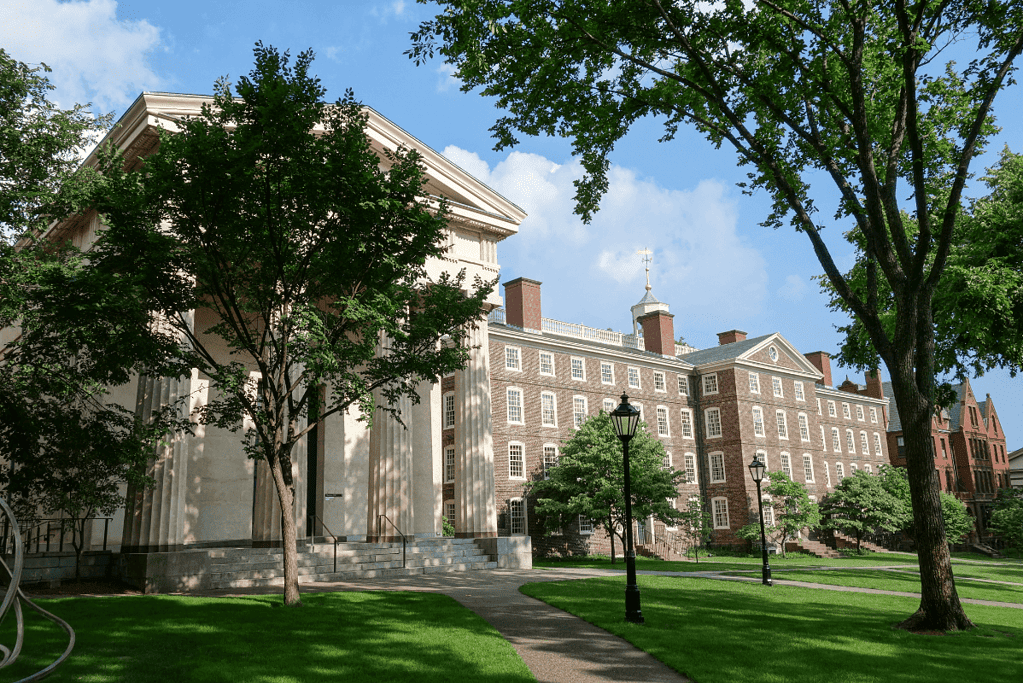
Founded in 1764 as the College in the English Colony of Rhode Island, Brown is the seventh college established in the American colonies. It renames itself after benefactor Nicholas Brown in 1804. What sets Brown apart across its history is a spirit of academic freedom — it’s an early adopter of the elective system, allowing students to choose their own courses rather than following a rigid prescribed path.
That spirit becomes formal policy in the late 1960s when Brown introduces its famous “Open Curriculum.” Students here have no distribution requirements. They design their own education. It’s either liberating or terrifying, depending on who you ask — but it makes Brown unlike any other Ivy.
Brown’s Van Wickle Gates open only twice a year: incoming freshmen walk in at Convocation, and graduating seniors walk out at Commencement. Campus legend holds that walking through at any other time brings bad luck and risks not graduating on time. Students take this seriously.
12. Rutgers University

Rutgers is founded in 1766 as Queen’s College — the eighth of nine colleges established in colonial America before the Revolution. It renames itself Rutgers in 1825 to honor Colonel Henry Rutgers, a Revolutionary War veteran whose donation helps keep the school alive. Today it serves as the official State University of New Jersey.
Rutgers grows from a small colonial school into a sprawling multi-campus public research university. Its colleges of pharmacy and engineering rank among the best in the country. With over 70,000 students across its campuses, it’s one of the largest universities in the United States.
On November 6, 1869, Rutgers hosts the first intercollegiate football game in American history — against Princeton. The rules resemble soccer more than modern football, and Rutgers wins 6-4. That game on a New Jersey field gives birth to a sport that now generates billions of dollars annually.
13. Dartmouth College

Reverend Eleazar Wheelock founds Dartmouth in 1769 with a Royal Charter from King George III — the last college chartered by the British crown before the Revolution. Wheelock’s original mission is to educate Native Americans and train missionaries, though the college quickly shifts toward a broader liberal arts education for European settlers.
Dartmouth earns its place in legal history in 1819 when a landmark Supreme Court case — Dartmouth College v. Woodward — establishes that private college charters are contracts protected from state interference. The ruling is one of the most important in American corporate law, using a small New Hampshire college as its foundation.
Dartmouth’s annual homecoming bonfire dates to the late 19th century. Each class stacks one tier of wood — with the freshman class running laps around the fire corresponding to their graduation year. The Class of 2027 runs 27 laps. It’s a cold, smoky, and beloved tradition in the New Hampshire autumn.
14. College of Charleston

The College of Charleston is founded in 1770 — right in the middle of the political tensions that produce the American Revolution. It’s the oldest institution of higher learning in South Carolina. In 1837, the City of Charleston takes direct responsibility for the college, making it the first municipal college in the United States.
The school’s downtown Charleston location gives students access to one of America’s most historically rich cities. Its programs in historic preservation, arts, and marine science reflect the unique environment of the South Carolina Lowcountry.
The “Cistern” at the center of campus was once a working water supply system for the city of Charleston in the 1800s. Today, draped in Spanish moss and surrounded by live oaks, it hosts graduation ceremonies and major campus events — one of the most picturesque gathering spots at any American college.
15. Salem College

Salem College is founded in 1772 by the Moravian Church in what is now Winston-Salem, North Carolina. It’s the oldest continually operating educational institution for women in the United States. The Moravians had a tradition of taking women’s education seriously long before the broader culture catches up — Salem College is living proof of that commitment.
What starts as a primary school for girls grows into a boarding school and then a respected liberal arts college. Through wars, Reconstruction, and the social upheaval of the 20th century, Salem keeps its focus on educating women for lives of leadership and public service.
The Single Sisters’ House on campus, built in 1785, was originally a residence and educational space for unmarried women of the Moravian Church. It’s one of the oldest buildings in the United States with an unbroken history of women’s education — and still stands on campus today.
16. Dickinson College

Dr. Benjamin Rush — physician, social reformer, and signer of the Declaration of Independence — founds Dickinson College in 1773. Rush names it after John Dickinson, a Founding Father known as the “Penman of the Revolution.” Both names carry serious patriotic weight, and the school leans into that identity from its founding.
Dickinson builds a reputation for international education and global engagement. Its organic college farm — 80 acres of certified organic land — doubles as a working food source for campus dining and a hands-on lab for students studying sustainable agriculture and food systems. It’s a small liberal arts college with an outsized commitment to practical, applied learning.
Dickinson’s certified organic farm covers 80 acres and supplies fresh produce directly to the college’s dining services. Students study sustainable agriculture on the same land that feeds them — a model of experiential learning that was well ahead of its time when the farm launched.
17. Hampden-Sydney College

Founded in 1775 by Presbyterian minister Samuel Stanhope Smith, Hampden-Sydney College opens just as the American colonies move toward open revolution. Two signers of the Declaration of Independence — Patrick Henry and Benjamin Harrison — sit on its first Board of Trustees. The school is barely a year old when the Declaration is signed.
Hampden-Sydney remains one of the few all-male colleges still operating in the United States. Its focus on honor, integrity, and character development runs through everything from its honor code to its curriculum. For those who choose it, the single-sex environment and strong emphasis on classical liberal arts make it unlike almost any other school in America.
Hampden-Sydney hosts “The Tiger Plunge” each homecoming weekend. Students, alumni, and community members gather at Chalgrove Pond on campus and take a ceremonial plunge into the water — a cold tradition that generates a lot of school spirit and at least a little hypothermia.
18. Transylvania University

Transylvania University, founded in 1780 in Lexington, Kentucky, is the oldest university in the state and the first university established west of the Allegheny Mountains. When it opens, Kentucky isn’t even a state yet — it’s still part of Virginia, and the Appalachian frontier is genuinely wild territory. Starting a university here is an act of frontier ambition.
The name “Transylvania” comes from the Latin words for “across the woods” — a fitting description of the university’s location at the edge of the known American world in 1780. Two U.S. vice presidents graduate from here: John C. Breckinridge and Richard M. Johnson. It remains a respected liberal arts college in Lexington today.
Yes, “Transylvania University” is a real school — and it predates Bram Stoker’s Dracula novel by over a century. The name simply means “across the woods” in Latin, describing the frontier wilderness that surrounded the campus in 1780. Students have had fun with the vampire connection ever since.
19. Washington & Jefferson College

Washington & Jefferson College traces its roots to Washington College, founded in 1781, and Jefferson College, founded in 1802. The two institutions merge in 1865 to form a single liberal arts college in Washington, Pennsylvania. The merger brings together two schools named after two of the founding era’s most influential figures.
W&J builds a strong reputation as a pre-professional liberal arts college, particularly for students heading toward law and medicine. Its location in western Pennsylvania puts it at the center of a region with deep historical significance in early American frontier history.
W&J holds an annual “Sailor Suit Day” — a tradition dating to the early 1900s when students would dress in sailor suits and march around campus serenading faculty. The tradition fades out in the 1950s, gets revived in the 1980s, and today lives on as a light-hearted campus celebration.
20. Washington College

George Washington donates to this small Maryland college in 1782 and allows it to use his name — making it the first institution of higher learning named after the future first president. The college sits in Chestertown, Maryland, along the Chester River, a small town with significant Revolutionary War history of its own.
Washington College produces Joseph Hopper Nicholson, an early student who later helps Thomas Jefferson win the presidency and assists Francis Scott Key in writing “The Star-Spangled Banner.” For a small school in a small town, its connections to founding-era history run remarkably deep.
Washington College competes against Salisbury University in the annual “War on the Shore” lacrosse rivalry, one of the most intense NCAA Division III matchups in the Mid-Atlantic. The game dates to 1969 and draws passionate crowds to the Eastern Shore of Maryland every spring.
21. University of Georgia

The University of Georgia is the birthplace of public higher education in America. Its charter in 1785 predates the U.S. Constitution — making UGA older than the federal government itself. Georgia creates it with the explicit goal of making higher education available to citizens, not just the wealthy or the clergy. It’s a radical democratic idea for its time.
UGA opens its doors to students in Athens in 1801 and grows into one of the flagship public research universities of the American South. Its journalism school, Grady College, is among the most respected in the country. The university’s academic history spans longer than almost any other public institution in America.
UGA is home to the Georgia Museum of Art — the largest university-owned art museum in the country. The collection holds more than 10,000 works, the museum is free to visit, and it serves as a cultural hub for both the university and the city of Athens.
22. Castleton University

Founded in 1787, Castleton University is the first college established in Vermont and the 17th oldest institution of higher education in the United States. Vermont becomes a state in 1791, meaning Castleton predates the state it calls home. It’s a public liberal arts institution that has served students in the Green Mountain State for nearly 240 years.
Castleton’s “Passing of the Light” ceremony welcomes incoming freshmen each year. Faculty, staff, and upperclassmen pass lit candles to new students, symbolizing the transfer of knowledge from one generation to the next. It’s one of the more quietly meaningful traditions at any small college.
23. York College of Pennsylvania

York College of Pennsylvania traces its roots to 1787 as the York County Academy. Over the following 180 years it merges, evolves, and eventually becomes a four-year liberal arts institution in 1968. It sits in York, Pennsylvania — a city with deep Revolutionary War history as a former capital of the Continental Congress in 1777-78.
York, Pennsylvania, calls itself the “Snack Food Capital of the World” — and it’s not wrong. The surrounding region is home to Utz Quality Foods, Snyder’s of Hanover, and Martin’s Potato Chips. York College students have a surprisingly robust pipeline into snack food industry careers.
24. Franklin & Marshall College

Founded in 1787, Franklin & Marshall College is named after Benjamin Franklin and Chief Justice John Marshall. It’s the first college founded in Pennsylvania and grows from 12 students to over 2,000 undergraduates across its history. It’s a selective liberal arts college with a particularly strong reputation for placing students in medical and graduate schools.
An Italian businessman named Giuseppe Albarelli finds a vintage F&M sweatshirt at a London market in the late 1990s and likes the name and logo enough to launch a European clothing brand around it. The “Franklin & Marshall” fashion label becomes hugely popular across Europe, and the actual college eventually signs a licensing deal that earns it royalties.
25. University of Pittsburgh

Founded as Pittsburgh Academy in 1787 by Hugh Henry Brackenridge, the University of Pittsburgh grows into one of the major public research universities in the United States. Its medical school produces generations of physicians, and its health sciences campus is one of the most important medical research centers in the country.
Pitt’s most famous landmark — the Cathedral of Learning — is a 42-story Gothic skyscraper completed in 1934. At 535 feet, it’s the second tallest academic building in the world. Inside are 30-plus Nationality Rooms, each designed and furnished by the communities of different countries to represent their cultural heritage.
The polio vaccine is developed at the University of Pittsburgh. Dr. Jonas Salk conducts his landmark research at Pitt in the early 1950s, and the vaccine is announced in 1955 — one of the most important medical breakthroughs of the 20th century, born on this 1787-founded campus.
26. University of North Carolina at Chapel Hill

The University of North Carolina at Chapel Hill is chartered in 1789 — the first public university in the United States — and opens its doors to students in 1795. That makes UNC the oldest state-supported institution of higher learning currently operating in the country. The distinction matters: UGA is chartered earlier, but UNC opens first.
UNC builds a reputation as one of the premier public research universities in America, particularly in medicine, public health, and journalism. Its medical school consistently ranks among the top programs in the country. The school also has a storied athletic tradition — its basketball program is one of the most successful in college history.
The “Fountain Frolic” tradition at UNC holds that drinking from the Old Well — a small water fountain at the center of campus — on the first day of classes will bring good luck and guarantee a 4.0 GPA for the semester. Lines form early. The placebo effect presumably does the rest.
27. Georgetown University

Father John Carroll, a Jesuit priest and the first Catholic bishop in the United States, founds Georgetown in 1789. It’s the oldest Catholic university in the country, established just steps from where the U.S. capital will soon be built. Georgetown’s proximity to the centers of American political power shapes everything about the school — its curriculum, its alumni network, and its culture of public service.
Georgetown’s School of Foreign Service is one of the most prestigious programs in international affairs anywhere in the world. Its law school consistently ranks in the top tier nationally. And its location in Washington, D.C., means internships with Congress, the State Department, and think tanks are standard parts of the undergraduate experience.
Georgetown’s campus has appeared in several major films, most famously in “The Exorcist” (1973). The steep stone staircase where a dramatic scene unfolds is known as the “Exorcist Steps” — and visitors still come to photograph them, making it one of the most visited film locations in Washington.
28. University of Vermont

The University of Vermont is chartered in 1791 — the same year Vermont joins the Union as the 14th state. The school and the state are born together. UVM, as it’s commonly known, is built on land donated by Ira Allen, one of Vermont’s founding figures and the brother of Ethan Allen of Green Mountain Boys fame.
UVM builds a particularly strong reputation in medicine and environmental studies. Its medical school is one of the oldest in New England. The university’s location in Burlington, overlooking Lake Champlain with the Adirondacks visible across the water, makes it one of the most scenically situated campuses in America.
UVM’s campus is home to the “George Washington Elm,” planted in 1872 from a cutting of the original Washington Elm in Cambridge, Massachusetts — the tree under which Washington supposedly takes command of the Continental Army in 1775. The tradition of preserving that connection stretches 150 years.
29. Williams College

Colonel Ephraim Williams funds this Massachusetts college through his will in 1793, with a requirement that it serve the town of Williamstown. Williams College grows into one of the most selective and highly regarded liberal arts colleges in the United States, consistently ranking at or near the top of national liberal arts college rankings.
Its location in the Berkshires — with nearby museums, mountains, and cultural institutions — gives Williams students an unusually rich environment outside the classroom. The tutorial program, which pairs students directly with faculty in small groups, defines the academic experience in ways larger universities can’t replicate.
“Mountain Day” at Williams is a college-wide surprise holiday declared each fall. The college president cancels all classes without warning on a day kept secret until it arrives — and the entire community heads outdoors to hike Mount Greylock or explore the Berkshires. The tradition began in 1877.
30. Tusculum University

Founded in 1794 by Reverend Samuel Doak in Greeneville, Tennessee, Tusculum is the oldest university in the state. Doak names it after Tusculum, a Roman hill town known in antiquity as a retreat for Roman scholars and statesmen including Cicero. The classical name signals the college’s ambitions from the very beginning.
Tusculum operates as a Presbyterian college in the frontier Appalachian region at a time when formal education in Tennessee is rare. It’s one of the earliest examples of higher education pushing westward in the new American republic.
Tusculum’s bronze statue of founder Reverend Samuel Doak has become an unofficial prop for student creativity over the years. Students have been known to add sunglasses, hats, scarves, and other accessories to the statue — especially around holidays and special campus events. Doak appears to take it well.
31. Bowdoin College

Chartered in 1794 and located in Brunswick, Maine, Bowdoin College builds one of the most impressive alumni rosters of any small liberal arts college in the country. President Franklin Pierce, novelists Nathaniel Hawthorne and Henry Wadsworth Longfellow, and Civil War General Joshua Chamberlain all attend Bowdoin. For a school in coastal Maine, its national influence is remarkable.
Bowdoin is also consistently recognized as having the best college dining in America. The school’s commitment to locally sourced food and culinary quality is a point of genuine pride — and an effective recruiting tool. Princeton Review named Bowdoin the top college for food in 2019.
Bowdoin’s dining program has won national recognition as among the best in the country, repeatedly earning top rankings from The Princeton Review. The emphasis on fresh, local ingredients isn’t just good for students — it’s become part of the college’s identity and competitive advantage.
32. University of Tennessee-Knoxville

Founded in 1794 as Blount College, the University of Tennessee changes names several times before its current identity sticks. It receives federal land-grant funding after the Civil War under the Morrill Act, becoming a comprehensive public university with a broad mission to serve Tennessee residents. Today, UT Knoxville is the flagship of the University of Tennessee system.
The university has one of the most recognizable color schemes in college sports — Tennessee orange fills Neyland Stadium on fall Saturdays, where the Volunteers play before 100,000 fans. That football culture is part of what defines the UT experience, but the university’s research output in engineering and agriculture is equally significant.
UT Knoxville runs the “Great Underwear Caper” during homecoming week — a competition where fraternity members collect donated underwear to give to local charities. The tradition started in the 1980s and manages to combine school spirit, friendly competition, and genuine community service in one unusual event.
33. University of South Carolina-Beaufort

The University of South Carolina Beaufort traces its roots to Beaufort College, chartered in 1795 as a private liberal arts school. It becomes part of the University of South Carolina system in 1959 and gains independent accreditation as a four-year institution in 2002. Its coastal location in the South Carolina Lowcountry — one of the most historically rich regions in the country — gives it a distinctive character.
USCB’s mascot is the Sand Shark — chosen by students in 2007 and inspired by the sand tiger sharks native to the South Carolina coast. It’s one of the more geographically specific college mascots in America, and it fits the school’s coastal identity perfectly.
34. Union College

Union College is the first institution chartered by the New York State Board of Regents, founded in 1795 with an explicit goal of non-denominational, inclusive education. At a time when most American colleges are tied to specific religious traditions, Union makes a point of welcoming students from different backgrounds. Its name reflects that mission — unity across difference.
Union is also the “Mother of Fraternities.” Three of the earliest Greek-letter fraternities in American history originate here, starting with Kappa Alpha Society in 1825. The Greek system as Americans know it today has its roots on this Schenectady campus.
Union College’s founder, Eliphalet Nott, experiments with electricity in the early 1800s and is credited with developing one of the first working electric motors in the United States. The school that births the Greek system also contributes to the early development of electrical power — an unusual combination.
35. Hartwick College

Founded in 1797 by Lutheran minister John Christopher Hartwick, Hartwick College begins as a seminary to train men for ministry. It becomes a co-educational liberal arts institution in 1928 and grows its programs in nursing, business, and the sciences. It sits in the Catskill foothills of New York, with a small-town environment that defines the student experience.
The “Elephant Walk” at Hartwick takes place on the eve of the first day of classes each year. New students, faculty, and staff parade through downtown Oneonta in costumes, led by an elephant mascot. For a small college in a small town, it makes quite an impression on the locals.
36. University of Louisville

Founded in 1798, the University of Louisville is one of the oldest institutions of higher learning in Kentucky and a leading public research university in the American South. Its medical and law schools have strong national reputations. The university sits in the heart of Louisville — a city known for bourbon, horse racing, and now a growing medical and tech economy that UofL helps drive.
Muhammad Ali is born in Louisville and trains at UofL’s boxing gym during his early career. The university honors that connection by naming the facility after him in 1997. It’s a reminder that the greatest boxer of all time has roots on this 1798-founded campus.
37. Middlebury College

Middlebury College is founded in 1800 in Vermont and builds one of the most distinctive identities of any liberal arts college in the country. Its Language Schools — immersive summer programs where students speak only their target language — are recognized as among the most effective language programs anywhere in the world. Students sign a pledge to speak nothing but French, Arabic, Chinese, Russian, or another language for the entire summer.
Middlebury also leads in environmental studies, with a deep institutional commitment to sustainability that goes back decades. Its Bread Loaf School of English is one of the oldest and most respected graduate programs in literature and writing in America.
Middlebury is home to WRMC 91.1 FM — the oldest student-run college radio station in the United States, founded in 1949. The station focuses on alternative and non-commercial music and has won multiple awards for its programming. For a college of 2,700 students, it punches well above its weight in the radio world.
38. Vincennes University

Founded in 1801 as Jefferson Academy and incorporated as Vincennes University in 1806, this Indiana institution is the oldest public college in the Northwest Territory — the region that becomes Ohio, Indiana, Illinois, Michigan, and Wisconsin. When Vincennes opens, Indiana is still a territory, not a state.
Vincennes transitions to a two-year institution in 1889 and today operates as a comprehensive community college with baccalaureate options. It serves a region of Indiana where access to higher education would otherwise be limited — carrying forward the frontier educational mission it started with more than 200 years ago.
Campus legend at Vincennes holds that the ghost of an old professor still wanders the hallways, searching for a grade book he lost before he could finish it. Students report strange happenings in the computer lab — the professor, apparently, is still trying to digitize his records.
39. University of South Carolina

Founded in 1801 as South Carolina College, the University of South Carolina is the oldest university in the state. It grows from a small liberal arts institution into a comprehensive research university with notable programs in business, law, and international affairs. The historic Horseshoe at the center of the original campus — a semicircle of antebellum buildings — is one of the most beautiful academic settings in the American South.
USC holds “Cocky’s Countdown” at the end of each academic year — a gathering at the historic Horseshoe where the university’s mascot, Cocky the Gamecock, presides over a countdown to summer. It’s a celebration of surviving another year and a testament to how deeply the Gamecock identity runs through campus culture.
40. United States Military Academy (West Point)

President Thomas Jefferson establishes West Point on March 16, 1802 — a date that changes American military history. The academy sits on a commanding bluff above the Hudson River at one of the most strategically important points in the country, a position George Washington fortified during the Revolution. Jefferson creates it because he believes the new republic needs professionally trained military officers, not just brave volunteers.
The list of West Point graduates who shape American military history reads like a who’s-who of the country’s defining conflicts. Ulysses S. Grant, William Tecumseh Sherman, Stonewall Jackson, Robert E. Lee, Dwight D. Eisenhower, Douglas MacArthur, and George S. Patton all walk through the same gates. On both sides of the Civil War, West Point graduates command the armies.
In the early 20th century, Army and Navy cadets attempted to steal each other’s live mascots — specifically cows — during the famous Army-Navy football game. Both academies have since banned the tradition out of concern for animal welfare, but it remains one of the stranger chapters in college rivalry history.
41. Ohio University

Ohio University, founded in 1804, is the first university in the Northwest Territory — the vast region beyond the Appalachians that becomes the modern Midwest. When OU opens in Athens, Ohio is only a year old as a state. The school grows into a large public research university with particular strengths in journalism and communications. Notable alumni include astronaut and senator John Glenn.
Ohio University runs a “sober squad” of trained student volunteers who patrol the school’s infamous outdoor parties and assist anyone in need. The school takes the health and safety of its legendary social scene seriously — which is either very responsible or very Ohio, depending on your perspective.
42. University of Maryland Baltimore

Founded in 1807 as the Maryland College of Medicine, the University of Maryland Baltimore is one of the oldest public universities in the United States and a major health sciences institution. Its Davidge Hall, built in 1812, is the oldest medical teaching facility in continuous use in the Western Hemisphere — a building where physicians have been trained for over 200 years.
UMB houses the “Kernan Collection” — over 5,000 rare medical instruments, books, and documents from the 18th century onward. Donated by Baltimore physician Dr. William Kernan in the early 20th century, the collection offers a window into the history of medicine that few institutions can match.
43. Mount Saint Mary’s University

Father John DuBois, a French émigré, founds Mount St. Mary’s in 1808 in the Blue Ridge foothills of Maryland. It’s America’s second-oldest Catholic university, and its early graduates go on to become bishops and church leaders across the country — earning the school its enduring nickname, the “Cradle of Bishops.” It houses the largest Catholic seminary in the United States.
The National Shrine Grotto of Our Lady of Lourdes on campus, built in 1875 as a replica of the French shrine, draws pilgrims and visitors from across the country. It’s a place of worship that predates the university’s reputation as an academic institution — and both reputations endure today.
Mount St. Mary’s holds an annual “Mountapalooza” festival at the end of the academic year — live music, food trucks, carnival games, and a beer garden. For a Catholic seminary school nicknamed the “Cradle of Bishops,” the end-of-year festival is a surprisingly lively celebration.
44. Miami University

Miami University — in Oxford, Ohio, not Florida — is founded in 1809 and is the second-oldest university in Ohio. Its red-brick Georgian Revival campus in the small college town of Oxford is one of the most architecturally cohesive in the country. President Benjamin Harrison is an alumnus, as is William Holmes McGuffey, who authors the McGuffey Readers used in American schools for generations.
Miami also lays claim to being the “Cradle of Coaches” — an unusual number of successful football coaches trace their careers back to time spent at Miami. Woody Hayes, Ara Parseghian, Bo Schembechler, and Weeb Ewbank all either played or coached at Oxford, Ohio.
The “Miami Merger” homecoming tradition brings the marching bands of Miami University and its opposing team together for a combined halftime performance. The tradition runs back to the 1950s and represents a different spirit than most fierce college rivalries — collaboration over competition, at least for one halftime.
45. Hamilton College

Named after Alexander Hamilton and chartered as a college in 1812, Hamilton College sits on a hill above Clinton, New York. It traces its origins to an earlier institution, the Hamilton-Oneida Academy, founded in 1793 by Reverend Samuel Kirkland as a school for both settlers and Oneida Nation youth. The college’s roots in cross-cultural education make it somewhat unusual for the era.
Hamilton is known today as one of the strongest liberal arts colleges in the Northeast, particularly for writing instruction. Its writing center model has been adopted by colleges across the country. The school’s hillside campus, with views of the Mohawk Valley below, is one of the most scenic in upstate New York.
Hamilton is home to the “Napping Society” — a student group dedicated to the health benefits of regular napping and known for organizing group “Nap-Ins” in designated campus locations. It’s unclear whether this is a commentary on academic stress, an embrace of wellness culture, or simply one of the better college club ideas anyone has had.
46. University of Virginia

Thomas Jefferson founds the University of Virginia in 1819 and considers it one of his three greatest life achievements — alongside writing the Declaration of Independence and establishing religious freedom in Virginia. Jefferson designs the entire original campus himself, creating what he calls an “academical village” — a Rotunda surrounded by pavilions and student quarters connected by covered walkways.
UVA is the only university in America designed by a president — and it looks the part. The Lawn, Jefferson’s original academic village, is a UNESCO World Heritage Site. The university’s honor system, established in 1842 with a single rule against lying, cheating, or stealing, still operates today with student-run trials and enforcement.
At UVA, students never say “freshman” — they say “first-year.” And they never call it “the university” casually; officially, it’s simply “the University,” a deliberate distinction from other schools that Cavaliers maintain with remarkable consistency. Jefferson’s school takes its identity very seriously.
47. Amherst College

Amherst College is founded in 1821 in western Massachusetts, originally as a school to educate underprivileged young men. It evolves into one of the most selective and highly regarded liberal arts colleges in the country. Like Brown, Amherst has an open curriculum — students design their own programs without distribution requirements, giving them unusual academic freedom for a small college.
The Five College Consortium, which links Amherst with nearby Smith, Mount Holyoke, Hampshire, and the University of Massachusetts Amherst, gives Amherst students access to the resources of four other institutions. It’s a model of collaborative higher education that’s rare in American academia.
The “Primal Scream” at Amherst takes place at midnight on the Sunday of finals week each semester. Students gather outside their dorms and let out a collective scream into the Massachusetts night. It’s a stress-relief tradition that’s both primal and oddly communal — the entire campus screaming together in the dark.
48. Kenyon College

Episcopal Bishop Philander Chase founds Kenyon College in 1824 in the tiny village of Gambier, Ohio — a place so remote that the college essentially builds the town around itself. Chase travels to England and personally raises funds from British donors, returning with enough money to establish a seminary and college in the Ohio frontier. The Gothic Revival architecture that defines Kenyon’s campus still gives it a distinctly English feel.
Kenyon builds one of the strongest reputations for English and creative writing of any small college in America. The Kenyon Review, founded on campus in 1939, becomes one of the most influential literary journals in the world. Paul Newman, E.L. Doctorow, and President Rutherford B. Hayes are among its notable graduates.
Kenyon holds a piece of art history on its wooded campus — one of sculptor Richard Serra’s earliest permanent outdoor works, installed in 1970. Two massive steel plates lean against each other on a hillside, creating an interplay between minimalist industrial art and the natural Ohio landscape that has puzzled and fascinated students for over 50 years.
49. Virginia Military Institute

The Virginia Military Institute, founded in 1839 in Lexington, Virginia, is the first state-supported military college in the United States — and the oldest public senior military college in the country. Its Corps of Cadets lives under strict military discipline while pursuing a rigorous academic curriculum. The combination produces officers and leaders who go on to serve in every major American military conflict.
Stonewall Jackson teaches physics and artillery tactics at VMI for a decade before the Civil War. George C. Marshall, the architect of the Marshall Plan that rebuilds Europe after World War II, is a VMI graduate. The institution sits in one of the most history-rich small towns in America, sharing Lexington with Washington and Lee University.
VMI cadets refer to their barracks as “the Barracks” and themselves as “rats” during their first year — a plebe system designed to build discipline and unit cohesion. The traditions at VMI are among the most rigorous and intentional of any American college, military or otherwise.
50. United States Naval Academy

Secretary of the Navy George Bancroft establishes the Naval Academy at Annapolis on October 10, 1845. The location — on the Severn River where it meets the Chesapeake Bay — is strategic, scenic, and intentional. Midshipmen here train for careers as Navy and Marine Corps officers under a curriculum that blends engineering, leadership, and military science with demanding physical standards.
The Naval Academy’s alumni list includes some of the most consequential figures in American military history. Admiral Chester Nimitz commands the Pacific Fleet in World War II. Alan Shepard, the first American in space, earns his commission at Annapolis. President Jimmy Carter is a graduate. The academy produces leaders not just for the Navy, but for the country.
The “Herndon Monument Climb” at the end of plebe year is one of the most physically demanding college traditions in America. A tall obelisk is covered in lard and topped with a plebe’s hat. The entire freshman class works together to reach the top and replace it with a midshipman’s hat — sometimes taking hours. The record is four minutes.
51. University of Wisconsin-Madison

The University of Wisconsin-Madison is founded in 1848 — the same year Wisconsin becomes a state. The two are born together, and that connection shapes the university’s identity. The Wisconsin Idea, an early 20th-century philosophy, holds that the university’s work should extend beyond the classroom into the life of the state and the world. It’s a vision of public higher education as direct community service.
UW-Madison becomes one of the great research universities in American history. Its researchers discover vitamins in the early 1900s. Its campus, set between two lakes with the Wisconsin State Capitol visible from Bascom Hill, is one of the most beautiful university settings in the Midwest. The school has a vibrant culture that balances serious academic ambition with an energetic campus life.
UW-Madison’s Babcock Hall Dairy Store sells ice cream made from milk produced by cows raised on the university’s own farm. The store produces over 75 flavors annually, including “Blue Moon” — a mysterious flavor that reportedly tastes like Froot Loops and glows with a distinct blue color. It’s been a campus tradition since 1951.
These 51 oldest colleges and universities in the United States aren’t just old — they’re alive. Every one of them is still operating, still educating students, still shaping what American higher education means.
They start as seminaries and become research powerhouses. They open in frontier territories before the territories become states. They train ministers who become generals, students who become presidents, and scientists who change the way we live. The 51 schools on this list don’t just teach history — they are history.
Which institution on this list surprises you most? And which one would you most want to walk through today?
FAQs: Oldest U.S. Colleges and Universities
Are the 51 oldest U.S. colleges exclusively private?
No. While private institutions dominate the early part of the list — Harvard, Yale, Princeton, and most colonial colleges are private — a significant number of public universities appear as well. UNC Chapel Hill (1789) is the oldest public university currently operating, and schools like UGA, Rutgers, and the University of Vermont round out the public representation. The two federal military academies, West Point and the Naval Academy, occupy their own category entirely.
What is the oldest public university in the United States?
This depends on how you define it. The University of Georgia (1785) is the first public university chartered in the United States. The University of North Carolina at Chapel Hill (1789) is the first to actually open its doors and begin educating students, in 1795. College of William & Mary (1693) is sometimes listed as the oldest public university, having been public for much of its history. Most historians cite UNC Chapel Hill as the oldest continuously operating public university.
How many Ivy League schools appear on this list?
Seven of the eight Ivy League schools appear. In founding order: Harvard (1636), Yale (1701), Penn (1740), Princeton (1746), Columbia (1754), Brown (1764), and Dartmouth (1769). Cornell is the only Ivy not on the list — founded in 1865, more than a century after its peers. The seven Ivies that do appear are all founded before the American Revolution.
What criteria determine which schools make this list?
Schools are included based on their founding date as degree-granting institutions and their continuous operation through to the present day. A school that closed and reopened under a different name or charter may have a different effective founding date than its historical predecessor. All 51 institutions on this list have maintained continuous operation from their founding date to the present.
Reader Resources
- The Chronicle of Higher Education — The nation’s largest newsroom dedicated to covering colleges and universities.
- U.S. News & World Report Best Colleges — Expert rankings and data to help navigate your education journey.
- The Princeton Review College Rankings — Student surveys and data-driven college rankings across dozens of categories.
- Forbes America’s Top Colleges — Rankings based on student success, return on investment, and alumni influence.
- The Common Application — The standard application platform for hundreds of U.S. colleges and universities.